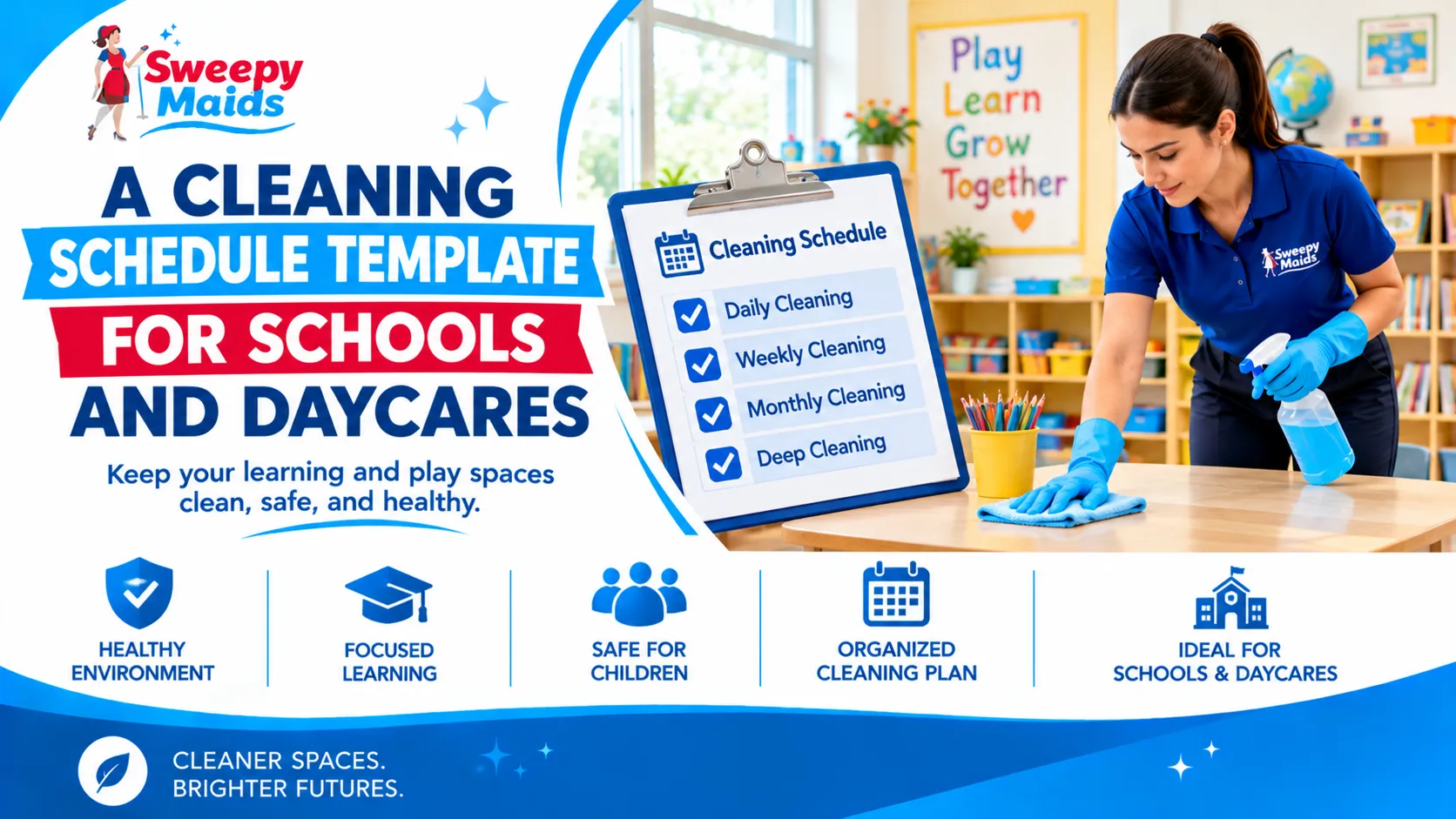

Schools and daycares get dirty in ways most workplaces never do. Small hands touch everything, toys end up in mouths, lunches get spilled, and illnesses can move through a room quickly. A written cleaning schedule turns all of that into a clear list of who cleans what, and how often, so nothing important is left to memory on a busy day.
This guide gives you a ready to use schedule template organized by frequency: after each use, daily, weekly, and periodic. It’s based on published child care cleaning guidance from Vancouver Coastal Health, with a separate section for schools. Use it as a starting point, then adjust it to match your licensing requirements, your building, and the ages of the children in your care.
Quick Answer: A school or daycare cleaning schedule should group tasks by frequency. After each use: diaper change surfaces, potties, and eating tables. Daily: toilets, sinks, washroom floors, high touch surfaces, and sweeping or vacuuming. Weekly: washing smooth floors and deeper cleaning of shared spaces. Periodic: carpet cleaning with steam or hot water, and full deep cleans during breaks. Always clean surfaces before sanitizing them, and follow your health authority’s licensing requirements.
Key Takeaways
- Organize by frequency. “After each use,” “daily,” “weekly,” and “periodic” are easier to follow than a long, unsorted list.
- Clean before you sanitize. Vancouver Coastal Health’s child care guidance says a surface can’t be properly sanitized until it has been thoroughly cleaned.
- Some tasks happen after every use. Diaper change tables, potties, and eating surfaces need attention each time they’re used.
- Carpets need a set schedule. VCH’s guidance calls for steam or hot water cleaning every 3 months in infant and toddler rooms.
- Your licensing officer has the final word. Requirements can differ by health authority and province, so confirm your schedule with them.
This template is general guidance based on published health authority resources. Child care facilities should follow their own licensing requirements and health authority guidance, which take priority over this article.
What a School or Daycare Cleaning Schedule Should Cover
A complete schedule covers every space children and staff use:
- Classrooms and play areas, including tables, chairs, shelves, and toys
- Washrooms, potties, and diaper change areas
- Eating areas, kitchens, and high chairs
- Nap areas, cots, cribs, and sleep mats
- High touch points such as door handles, light switches, railings, and taps
- Floors and carpets
- Offices, staff rooms, and entrances
Cleaning vs Sanitizing: Why the Order Matters
Cleaning uses soap or detergent, water, and scrubbing to remove dirt and germs from a surface. Sanitizing uses a product to reduce the germs that remain. According to Vancouver Coastal Health’s child care guidance, a surface cannot be properly sanitized until it has first been thoroughly cleaned. VCH also notes that sanitizers used on items children may put in their mouths must be suitable for that purpose, and that staff should read the entire product label.
Daycare Cleaning Schedule Template
| How Often | Area or Item | Task |
| After each use | Diaper change table and potty | Clean and sanitize |
| Before and after each use | Tabletops used for eating | Clean and sanitize |
| Between children and when soiled | Cots, cribs, and playpens | Clean and sanitize |
| When soiled | Sleep mats | Clean and sanitize |
| Daily and when soiled | Toilets, sinks, washroom floors | Clean and sanitize |
| Daily | Smooth floors | Vacuum or sweep |
| Daily | High touch surfaces (door handles, light switches, taps) | Clean and sanitize |
| Weekly and when dirty | Smooth floors | Wash |
| Every 3 months | Carpets in infant and toddler rooms | Clean with steam or hot water |
| Every 6 to 12 months | Carpets in other rooms | Clean with steam or hot water |
| Per your toy cleaning guidelines [VERIFY] | Toys, especially mouthed toys | Clean and sanitize with a product suitable for mouthed items |
Frequencies for diaper areas, tables, cots, mats, washrooms, floors, and carpets are from Vancouver Coastal Health’s child care cleaning guidelines. Rows marked [VERIFY] are not specified in that document and should be confirmed with your licensing officer.
READ MORE: How Often Should a Commercial Office Be Cleaned?
School Cleaning Schedule Template
Schools serve older children, and most don’t have diapering or nap areas, but the same frequency based approach works well. [VERIFY: check these frequencies against your school district’s facilities standards before using them.]
| How Often | Area or Item | Task |
| Daily | Washrooms (toilets, urinals, sinks, floors) | Clean and sanitize |
| Daily | High touch surfaces (door handles, railings, light switches, taps) | Clean and sanitize |
| Daily | Classroom floors | Sweep or vacuum |
| Daily | Cafeteria tables and kitchen surfaces | Clean and sanitize after meal periods |
| Daily | Garbage and recycling | Empty and replace liners |
| Weekly | Desks, chairs, and shelves | Wipe down thoroughly |
| Weekly | Hard floors in classrooms and hallways | Mop or machine scrub |
| Periodic | Carpets | Professional steam or hot water cleaning |
| During breaks | Whole building | Deep clean, including walls, windows, vents, and floor care |
When to Bring in Professional Cleaners
For daily after hours cleaning. Many schools and daycares have staff handle “after each use” tasks during the day, while a cleaning team handles washrooms, floors, and full room resets after children leave. Our guide to in house janitorial vs outsourced commercial cleaning compares the two approaches.
For carpets and floor care. Steam or hot water carpet cleaning needs proper equipment. See how often to get professional carpet cleaning and our comparison of steam cleaning vs shampooing carpets.
For deep cleans during breaks. Summer, winter, and spring breaks are the best times for detailed cleaning that’s hard to do while children are on site. Our guide to the deep cleaning vs standard cleaning price difference in Canada explains how deeper work is priced.
Did You Know? Vancouver Coastal Health’s guidelines for cleaning and sanitizing in a child care centre recommend cleaning carpets in infant and toddler rooms with steam or hot water every 3 months, and carpets in other rooms every 6 to 12 months. The same guidance says diaper change tables and potties should be cleaned and sanitized after each use, and eating tables before and after each use. Babies and toddlers spend much of their day on the floor, which is why their rooms are on the shortest carpet schedule.
READ MORE: In House Janitorial vs Outsourced Commercial Cleaning: What’s Better for Your Business?
How to Put This Template to Work
Assign every task to a person or role. A schedule only works when everyone knows who’s responsible. Add a name or role beside each row.
Keep a simple log. A sign off sheet for daily and weekly tasks makes it easy to see what’s been done and helps during licensing inspections.
Review it with your licensing officer. Share your schedule with your health authority’s licensing officer and update it to match any specific requirements.
Decide what to outsource. If staff time is stretched, a cleaning company can take on after hours and periodic tasks. Our cost vs time breakdown, our guide to recurring vs one time cleaning service, and our comparison of cleaning companies vs independent cleaners can help you decide. Whoever you hire, check insurance and WorkSafeBC coverage, as explained in our guide to finding reliable cleaners in Langley.
Need help keeping your school or daycare on schedule? Get a free quote from Sweepy Maids and we’ll build a cleaning plan around your hours.
Frequently Asked Questions
How often should toys be cleaned in a daycare?
It depends on the toy and how it’s used. Toys that children put in their mouths need more frequent cleaning and must be sanitized with a product suitable for that purpose. Check your health authority’s toy cleaning guidelines and your licensing officer for exact frequencies.
What’s the difference between cleaning and sanitizing?
Cleaning removes dirt and germs with soap or detergent, water, and scrubbing. Sanitizing reduces the germs that remain. Vancouver Coastal Health’s guidance says surfaces must be cleaned before they can be properly sanitized.
Can I use this template for a home daycare?
Yes, as a starting point. Home based child care has many of the same needs, especially diaper areas, eating surfaces, and floors. Confirm the details with your licensing officer.
Should a school or daycare use professional cleaners?
Many do, especially for after hours cleaning, carpets, and deep cleans during breaks. Staff usually handle the “after each use” tasks during the day.
Where can I find more cleaning schedules?
For homes, our room by room deep cleaning guide offers a similar frequency based approach. For businesses, see how often a commercial office should be cleaned and our homeowner’s guide to commercial cleaning in Abbotsford.
Related Cleaning Guides
- Average Cost of Weekly House Cleaning in Calgary
- The Complete Guide to Booking Airbnb Cleaning in Vancouver
- Airbnb Turnover Cleaning Cost in Surrey and Kelowna
- Move In vs Move Out Cleaning: A Renter’s Timeline
- What to Expect From a Move Out Cleaning Service in Vancouver
- Move Out Cleaning Checklist to Get Your Full Damage Deposit Back
- What’s Included in a Professional Move In Cleaning?
About the Author
Parth Katyal is the founder of Sweepy Maids and a cleaning industry specialist with more than 10 years of experience serving Canadian homeowners and businesses. Sweepy Maids started in Surrey, BC and now operates across Metro Vancouver, the Fraser Valley, Vancouver Island, Kelowna, Calgary, Brampton, Edmonton, and Montreal, including our Vancity Newton branch. Parth’s focus on eco friendly products, bonded and background checked staff, and transparent pricing shapes how Sweepy Maids approaches every space it cleans.