
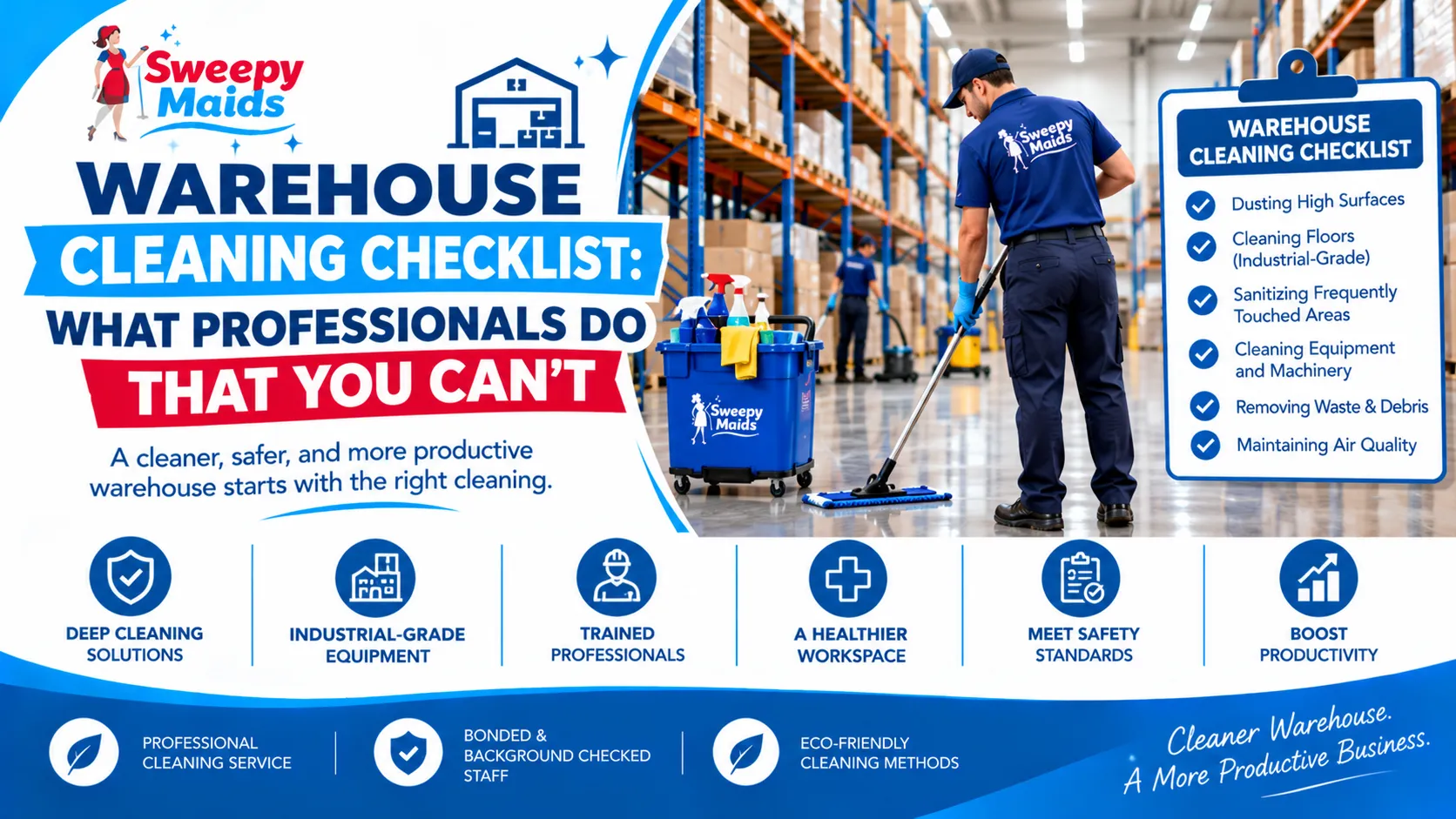

Your own team can keep a warehouse tidy day to day: sweeping aisles, emptying bins, clearing spills, and wiping down break rooms. Where professionals earn their keep is the work that needs specialized equipment, trained crews, or safety planning, such as scrubbing and degreasing large floor areas, high level dusting of racking, beams, and lights, and deep cleaning loading docks and washrooms on a schedule that doesn’t stop operations.
That’s the honest version of “what professionals do that you can’t.” It’s not that your staff are incapable. It’s that many warehouse cleaning jobs need machines most businesses don’t own, chemicals that require training to handle safely, or work at heights that comes with legal safety requirements in BC. A good checklist splits the work so your team handles the daily basics and a professional crew handles the rest.
Quick Answer: A warehouse cleaning checklist should cover daily tasks (sweeping, spill cleanup, garbage and recycling, break room and washroom wipe downs), weekly tasks (mopping or machine scrubbing high traffic floors, dusting reachable surfaces, cleaning dock areas), and periodic deep cleaning (floor degreasing, high level dusting of racking, beams, and lights, and detailed washroom and office cleaning). In house staff can usually manage daily and weekly basics. Periodic jobs that need industrial equipment, chemical handling, or work at heights are where professional cleaners are worth bringing in.
Key Takeaways
- Split the checklist by frequency. Daily, weekly, and periodic tasks need different time, tools, and people.
- Daily basics can stay in house. Sweeping, spill cleanup, and bin emptying fit easily into your team’s routine.
- Big floors need big machines. Large area scrubbing and degreasing is faster and more thorough with commercial equipment.
- Work at heights has rules. In BC, employers must use a fall protection system where a fall of 3 metres or more could occur.
- Chemical handling needs training. Across Canada, employers must provide WHMIS education and training to workers who handle hazardous products.
What Warehouse Cleaning Actually Covers
Warehouse cleaning is about more than appearances. A clean warehouse is safer to walk and drive through, easier to audit, and better for the products and equipment stored inside. A full warehouse cleaning scope usually includes:
- Main floors, aisles, and traffic lanes
- Loading docks, dock doors, and receiving areas
- Racking, shelving, beams, and overhead lights
- Break rooms, kitchens, and washrooms
- On site offices and meeting rooms
- Garbage, recycling, and waste collection areas
Why Warehouse Cleaning Is Different From Office Cleaning
Offices are cleaned mostly by hand, with vacuums and standard supplies. Warehouses are larger, dustier, and busier, with forklifts, pallets, and high ceilings. Floors may carry oil, tire marks, and debris, and dust builds up on surfaces high above the floor. That’s why a warehouse clean relies more on machines, scheduling around operations, and safety planning. If your warehouse includes office space, our guide on how often a commercial office should be cleaned covers that side.
In House Team vs Professional Cleaners: Side by Side
| Warehouse Task | Your In House Team | Professional Cleaners |
| Sweeping aisles and clearing debris | Good fit, daily | Often included in scheduled visits |
| Spill cleanup | Must be done immediately by your staff | Not practical to wait for |
| Garbage and recycling | Good fit, daily | Can be included |
| Break rooms and washrooms | Daily wipe downs | Detailed weekly or periodic cleaning |
| Large area floor scrubbing | Possible with equipment and training | Commercial scrubbers and trained operators |
| Floor degreasing | Possible with training on chemicals | Trained crews and appropriate products |
| High level dusting (racking, beams, lights) | Requires fall protection and equipment at height | Equipped and trained for work at heights |
| Office carpets | Vacuuming | Deep carpet cleaning |
READ MORE: In House Janitorial vs Outsourced Commercial Cleaning: What’s Better for Your Business?
Daily and Weekly Tasks Your Team Can Handle
Daily
- Sweep main aisles, traffic lanes, and work areas
- Clean up spills right away and mark wet areas
- Empty garbage and recycling bins
- Wipe break room counters, tables, sinks, and appliance handles
- Restock and tidy washrooms
Weekly
- Mop or machine scrub high traffic floor areas
- Dust reachable shelving, workstations, and equipment
- Sweep and tidy loading docks and receiving areas
- Clean washroom fixtures, mirrors, and floors thoroughly
- Vacuum office carpets and wipe desks and high touch points
Periodic Tasks Where Professionals Make the Difference
Floor scrubbing and degreasing. Large warehouse floors collect oil, tire marks, and ground in dirt. Commercial ride on or walk behind scrubbers clean large areas far faster than a mop, and degreasing often involves products that require proper handling.
High level dusting. Dust on racking, beams, ducts, and light fixtures can fall onto stock and equipment. Reaching it safely usually means lifts or other equipment at height, which brings fall protection requirements.
Detailed washroom, break room, and office cleaning. A periodic deep clean resets areas that daily wipe downs don’t fully reach. Office carpets benefit from regular professional care too. See how often to get professional carpet cleaning.
Move in and move out cleans for leased space. When you take over or hand back a leased warehouse or industrial unit, a thorough clean helps you start fresh or meet your lease conditions. Our guides to what’s included in a professional move in cleaning and what to expect from a move out cleaning service explain the residential version of the same process.
Did You Know? Under WorkSafeBC’s Occupational Health and Safety Regulation, employers must ensure a fall protection system is used when work is done where a fall of 3 m (10 ft) or more may occur, and a written fall protection plan is required where workers could fall 7.5 m (25 ft) or more without permanent guardrails. On top of that, the Canadian Centre for Occupational Health and Safety notes that every Canadian jurisdiction requires employers to provide WHMIS training for workers who handle hazardous products. High dusting and floor degreasing aren’t just cleaning tasks. They come with safety obligations.
READ MORE: How Often Should a Commercial Office Be Cleaned?
How to Build a Warehouse Cleaning Plan
Split tasks by frequency and skill. Keep daily basics with your team and schedule periodic deep cleaning with professionals. Our guide to recurring vs one time cleaning service helps you decide what should be on a schedule and what can be booked as needed.
Decide who does the work. Compare the true cost of handling everything in house against outsourcing. Our guide to in house janitorial vs outsourced commercial cleaning and our cost vs time breakdown walk through the numbers.
Vet your cleaning provider. Ask for proof of liability insurance and a WorkSafeBC clearance letter, and ask how crews are trained for equipment, chemicals, and work at heights. Our guides to cleaning companies vs independent cleaners and finding reliable cleaners in Langley cover what to check.
Plan around operations. Schedule deep cleaning for off hours, weekends, or slower periods, and clear the areas being cleaned so crews can work safely.
Need a cleaning plan for your warehouse? Get a free commercial cleaning quote from Sweepy Maids and we’ll recommend a scope and schedule around your operations.
Frequently Asked Questions
How often should a warehouse be professionally cleaned?
It depends on the size of the space, the type of goods stored, traffic levels, and how much dust and debris your operations create. Many warehouses combine daily in house cleaning with weekly, monthly, or quarterly professional deep cleans.
Is warehouse cleaning more expensive than office cleaning?
It’s usually priced on size, scope, equipment, and how often you need service, so it can differ a lot from office cleaning. Detailed work costs more than routine visits, as our guide to the deep cleaning vs standard cleaning price difference in Canada explains.
Can professionals clean while the warehouse is operating?
Some tasks can be done around operations, but floor scrubbing and high level dusting usually need areas cleared for safety. Most businesses schedule these for off hours or slower periods.
Do professional cleaners bring their own equipment?
Many commercial cleaning companies bring their own machines and products. Confirm what’s included, especially for floor scrubbers and equipment for work at heights.
Do you clean warehouses outside Vancouver?
For businesses in the Fraser Valley, see our homeowner’s guide to commercial cleaning in Abbotsford, and contact us to confirm coverage for your location.
Related Cleaning Guides
- How Often to Deep Clean Your House, Room by Room
- Steam Cleaning vs Shampooing Carpets: Which Is Right for Your Home?
- Average Cost of Weekly House Cleaning in Calgary
- The Complete Guide to Booking Airbnb Cleaning in Vancouver
- Airbnb Turnover Cleaning Cost in Surrey and Kelowna
- Move In vs Move Out Cleaning: A Renter’s Timeline
- Move Out Cleaning Checklist to Get Your Full Damage Deposit Back
About the Author
Parth Katyal is the founder of Sweepy Maids and a cleaning industry specialist with more than 10 years of experience serving Canadian homeowners and businesses. Sweepy Maids started in Surrey, BC and now operates across Metro Vancouver, the Fraser Valley, Vancouver Island, Kelowna, Calgary, Brampton, Edmonton, and Montreal, including our Vancity Newton branch. Parth’s focus on eco friendly products, bonded and background checked staff, and transparent pricing shapes how Sweepy Maids approaches every space it cleans.